History & More


PERIOD HISTORY

GEORGIAN PERIOD 1714-1830
EARLY VICTORIAN PERIOD   1837-1860
MID VICTORIAN PERIOD   1860-1880 
LATE VICTORIAN PERIOD 1880-1901  
ART NOVEAU PERIOD      1885-1914    
ARTS AND CRAFT PERIOD 1890-1914     
EDWARDIAN PERIOD   1901-1910                   
ART DECO PERIOD                        1925-1935
RETRO OR VINTAGE PERIOD 1935-1960
MODERN PERIOD  1950s to date


GEORGIAN PERIOD

The Georgian period encompassed five kings and 116 years, In England, only 22 carat and 18 carat gold were used in the creation of     jewellery, Exquisitely handmade jewellery was then owned by only the extremely wealthy. Georgian jewellery is rarely hallmarked or stamped. Gems were  less important than the artistry of the design, although  Amethysts in particular were incredibly expensive and therefore used for only the highest value pieces. As closed back settings were hugely popular, many gems were foil backed to aid refraction and shimmer and the settings themselves were highly ornate. France began again to embrace and influence fashions which favoured amythest, garnet, paste, topaz, coral agate pearls and chrysoberyl.


VICTORIAN PERIOD

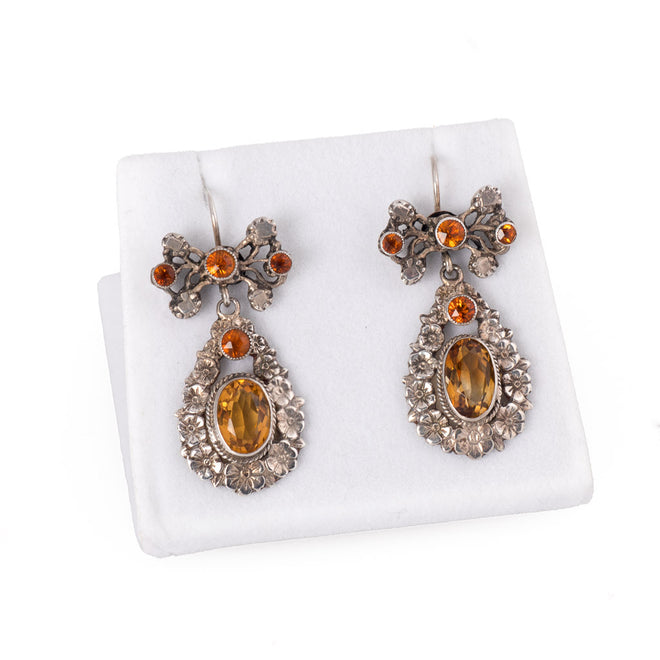
Queen Victoria's reign lasted from 1837-1901, therefore Victorian jewellery is best studied  as three main periods; Romantic, Grand and Aesthetic. The Romantic period was heavily influenced by the marriage of Queen Victoria to Prince Albert and favoured sentimentality and symbolism. Gems used for jewellery included pearls, coral, amethyst, citrine and topaz as well as natural materials such as tortoiseshell, ivory and jet. Motifs including song birds, love knots, hearts and flowers, all of which were decorated with sentimental  meanings were extreemly popular. Symbolic Jewellery caused a revival of pieces such as the "REGARD" ring , and a Renaissance Revival saw the return of bold enamelling decorated with precious gems.

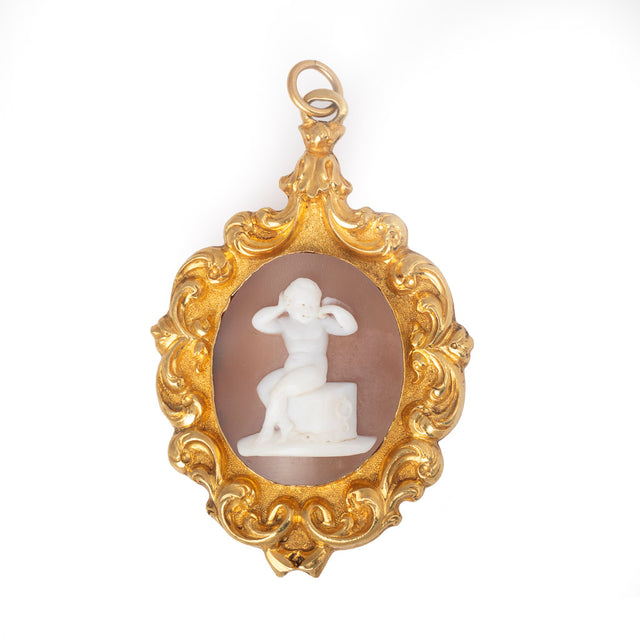
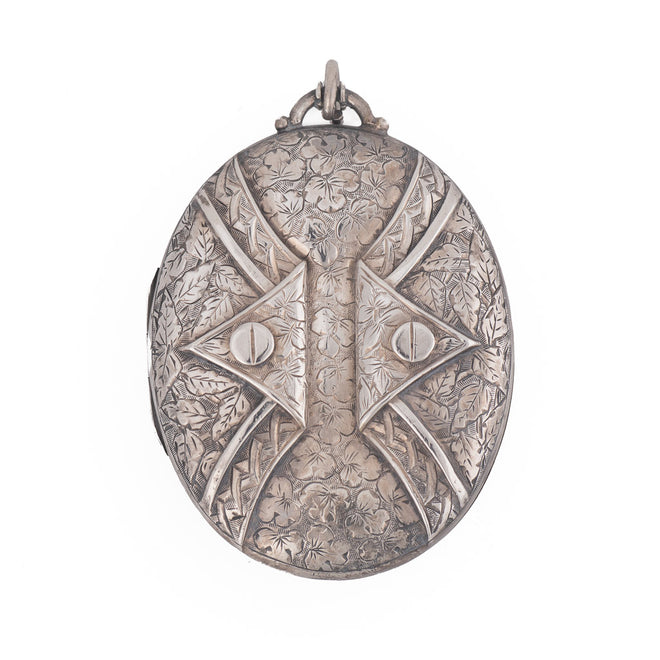
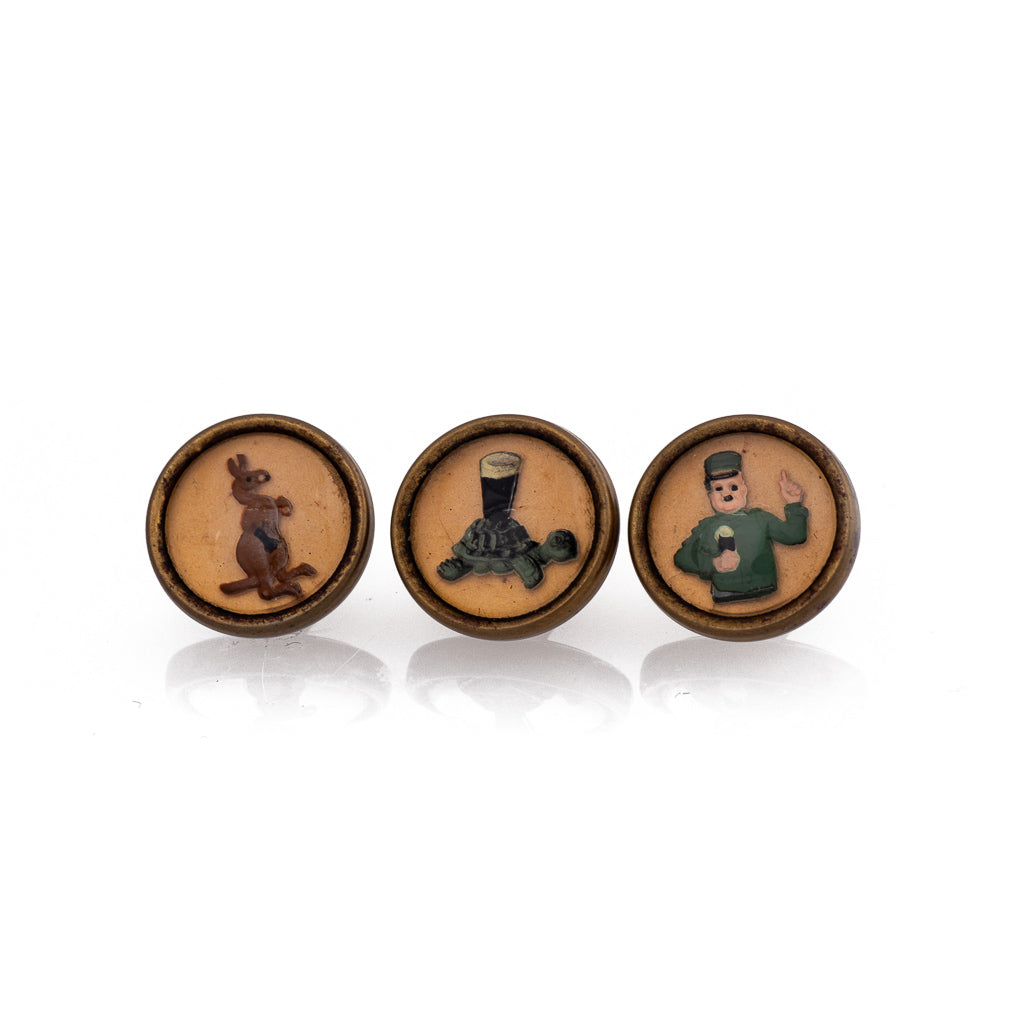
1861 saw the Romantic period end abruptly with the death of Prince Albert, and so followed the long period of mourning during which time only carved jet jewellery was allowed to be worn in Court, Generally every where else everyone wore heavy, dark stones such as garnets and jet, black enamelling and mourning rather than sentimental  pieces. Jewellery focused more on those departed than those remaining and had an extreemly dark mood. Micro Mosaic, Pietra Dura and Cameos were brought to  England and set by the jewellers there. Sport of this time influenced reverse-intaglio crystals, jewelled and enamelled animal scenes hunting motifs.

1880 jewellery trends began to revolt against the sombre moods of the Grand Mourning  Period and again embraced the uplifting beautiful side of design . Crescent moons, stars, and butterflies , Many gems were chosen for their aesthetic beauty rather than intrinsic value. Now with the discovery of diamonds in Africa and Victoria's Diamond Jubilee, the wearing of diamonds had been previously reserved only for wealthy, women cast aside the rigid formalities of years gone by and incorporated the then new diamonds into their jewellery. Demand also called for the introduction of more affordable gold and so 9 carat, 12 carat and 15 carat were introduced from 1854. Hallmarks were the responsibility of the manufacturer and varied in detail and design.

Victorian Era - Materials other than gold were used in Victorian Jewellry: Pinchbeck  is a copper and zinc look alike to gold that was made for a short time

Rolled Gold or Gold Fill
Gold plated over sterling Silver
Enamels
Cameos .....stone, shell, lava, and gems carved.
Bog Oak
Jet

Ivory
Petra dura
Micro-mosaic (of very small tesserae)
Cut Steel
Tortoiseshell
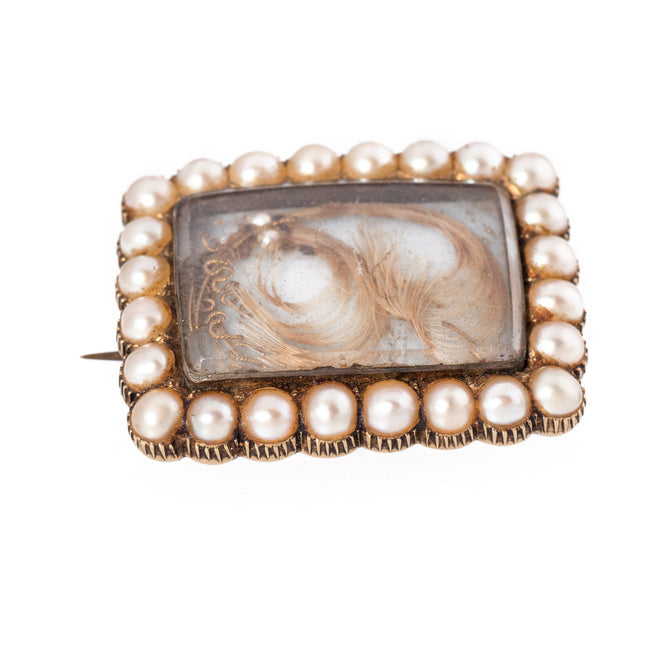
Human Hair

Mourning jewellery of the Victorian era followed a strict protocol. There were rules that  regulated the length of time to wear black and exactly when color would be reintroduced into an individuals adornment. The jewellery allowed followed the colour rules. Black materials, Jet, Onyx, French Jet, and Bog Oak were commonly used for mourning jewellry because of their flat black appearance


ARTS AND CRAFTS MOVEMENT

This movement began in the late 1850's, and continued until the dawn of the 20th Century as a reaction against the dehumanisation of man by the machine. Influenced by the work of John Ruskin and William Morris, less emphasis was placed on the intrinsic value than on innovation and handmade crafting. Arts & Crafts pieces are generally free of embellishment, favouring simpler lines and more subtle use of naturalistic materials with the focus laid  firmly at the feet of quality. Many jewellery pieces featured silver, green or blue enameling, abstract designs and uncut stones.

ART NOUVEAU


Following in the footsteps of the Arts & Crafts Movement in England, the Art Nouveau style was created in France at the turn of the last century and incorporated naturalistic design, swirling, graceful free flowing lines, enameling techniques from the Orient and the superior craftsmanship of the Arts & Crafts Movement to create a sensuous, sinuous style.  Art Nouveau took its inspiration from the beauty of nature, and featured exotic flowers,  winged dragons, dragonflies set with , semi-precious gems sometimes enhanced by enameling. Ostentatious displays of wealth through jewellery became the true antithesis of Art Nouveau.

EDWARDIAN PERIOD


Edwardian jewellery tends to be less ornate than victorian jewellery, using simple classical lines featuring graceful bows and swags. This innovation marked a turning point in the way jewellery was worn. Clean lines and uncluttered designs in contrast to the heavily embellished and more formal jewells previously worn. in the victorian era. Jewellery became worn by an increasing number of people, and the demand for White Gold and Platinum pieces increased. These became the metals of choice for both the wealthy and fashion conscious.

ART DECO


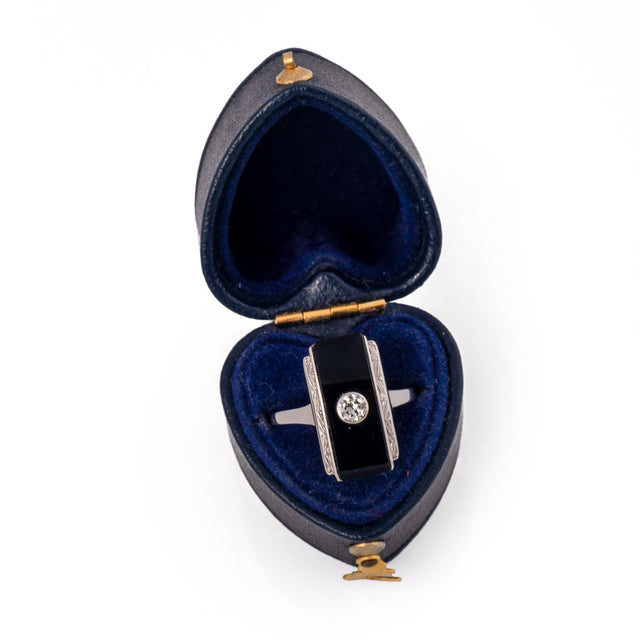
Art Deco was a minimal clean cut modern style which began around 1910 although the"true" Deco period is generally limited to the 1920's and 30's. The term "Art Deco" was used to describe the fashion for geometric lines, bold colour and abstract design . Together with Cubism influences, and the discovery of the tomb of King Tut in Egypt the beauty if geometry and flamboyant prominence of abstract art became the height of fashion. Emeralds, rubies and blue sapphires took centre stage, enhanced by Diamonds. Jewellery became, above all else "dramatic," and unconventional. Feminine designs gave way to straight lines, perfect circles, pyramidal shapes and perfect symmetry. Egyptian symbols became hugely popular, in particular the scarab beetle who's symmetrical form lent itself to the geometrical fascination of the time. The use of chrome in interior design increased the popularity of  platinum and white gold for jewellery and also brought about a popularity for design.


MODERN JEWELLERY


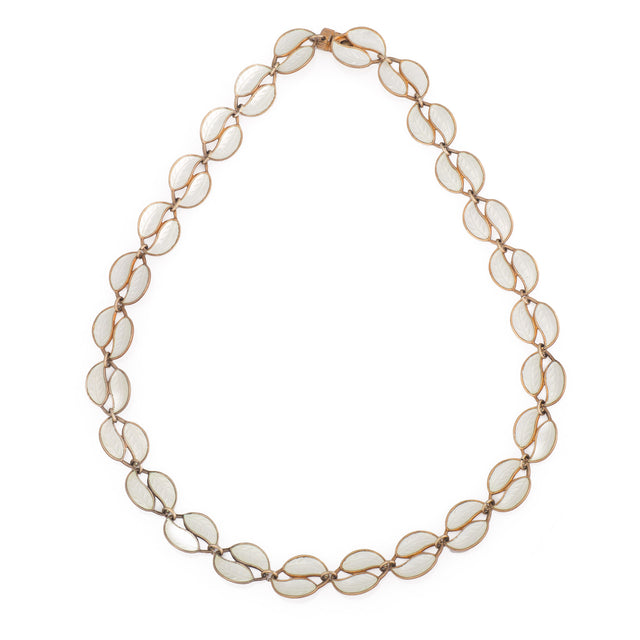
The modern jewellery movement began in the late 1940s at the end of World War II with a renewed interest in artistic and leisurely pursuits. This is most noted with works by GEORGE JENSEN and other jewellery designers who advanced the concept of wearable  Artisitc jewellery. The advent of new materials, such as plastics, metals and colouring  techniques, has led to increased variety in styles. Other advances, such as the development of improved pearl harvesting  and the development of improved quality  of synthetic or artificial gemstones such as the diamond simulant . This has placed jewellery within the economic grasp of a much larger segment of the population.


ESTATE JEWELLERY


Estate Jewellery is jewellery that has been acquired from the estate of a person either alive or deceased. The simple definition is that it was previously owned.

There is the belief that all estate jewellery is antique, this is not true. Although some pieces may be antique,  many pieces are either vintage, art deco, retro or fairly modern.

There are some beautiful costume jewellery pieces that are also under the category of estate jewellery.


 BIRTHSTONES

January           Garnet
February          Amethyst
March              Aquamarine
April                  Diamond
May                   Emerald
June                 Pearl
July                   Ruby
August             Peridot
September     Sapphire
October           Opal
November      Topaz
December      Turquoise / Blue Topaz


JEWELLERY SYMBOLOGY

Jewellery symbology and sentimentality was taken to such an extreme that very intimate messages were spelled out in jewellery that could be read, the design and stones used  to pass on the sentiment of the givers feelings.

VOCABULARY OF SYMBOLISM 

 IVY        Friendship, fidelity, or marriage
FERN    Fascination
BLUEBELLS    Constancy
FORGET ME NOTS    Remembrance
LIZARDS   Passionate Love
ARROWS   Love (Cupid's arrows)
CROWNED HEART  Love Triumphant
DOGS     Fidelity
BUTTERFLY   Soul
DOVES      Domesticity
DAISY      Innocence
HARP        Ireland or Constant Love
LILAC       First feelings of Love
MISTLETOE    A kiss
CLASPED HANDS   Friendship or Lasting Love
MUSICAL INSTRUMENTS    Harmony
FLAMING HEART    Passionate Love
FLY    Humility, Like the snake this symbol changed over time. In Elizabethan time the fly who could  go anywhere and observe everything without being noticed was used to denote the possession of wisdom based on hidden or obscure knowledge.
WISHBONE    Wish and Hope. The shamrock and horse shoe as symbols of Luck
ROSES       Many meanings, depending on the type of bloom and color.
SNAKES    The snake was a very popular motif. Snakes in their coils, were symbols of    eternity and  of   commitment

GEMS


Specific gems could also have specific meanings, for instance:
PEARLS    Tears
AMETHYST  Devotion
DIAMOND    Constancy
EMERALD     Hope
RUBY     Passion

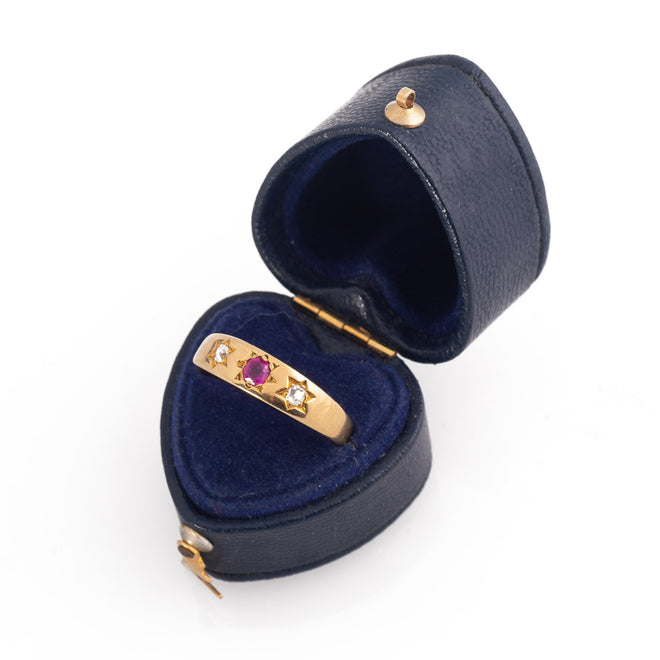
Gems were also used as a type of code to spell out words. The first letter of the gems' names would stand for letters. In this way, a piece set with a Diamond, Emerald, Amethyst,  and Ruby      (in that order) would spell the work "DEAR" Other examples of this "code" can be found spelling out: Regard, Fidelity, Gratitude, Ever Thine, Baby, Mother, and individual names.


Search
 
Close